An AI photo-studio that helps fashion e-commerce brands create consistent, marketplace-ready product imagery at scale, with brand-kit controls built in.
In short: I stepped in as the acting PM on Photogenix mid-project and helped shape its direction, turning real user pain points (on the tool and off it) into prioritized, shipped improvements. I got genuinely hands-on: driving feature revamps from prototype to release, building a deep technical understanding of the SaaS, communicating priorities to developers, and owning timely releases against tight sprints. Leading a team that ranged from highly experienced engineers to newcomers I onboarded made it a true 360° crash course in product, people, clients, and fast, high-stakes decision-making.
Photogenix — Dashboard
1M+
Products processed for Indian retail & fashion brands
60%
Faster turnaround, enabling same-day delivery
~65%
Lower cost per image
The problem
Photoshoots don't scale. Shooting hundreds of SKUs in a day is expensive, slow, and impossible to repeat every season.
Every marketplace wants something different. Varying sizes and edits per channel stretch turnaround until brands ship months-old photos.
Imagery drives conversion. When visuals lag, sales quietly leak. The cost is real but rarely measured.
The approach
Existing inputs, campaign output. Turn the product shots brands already have into marketplace-ready images and videos.
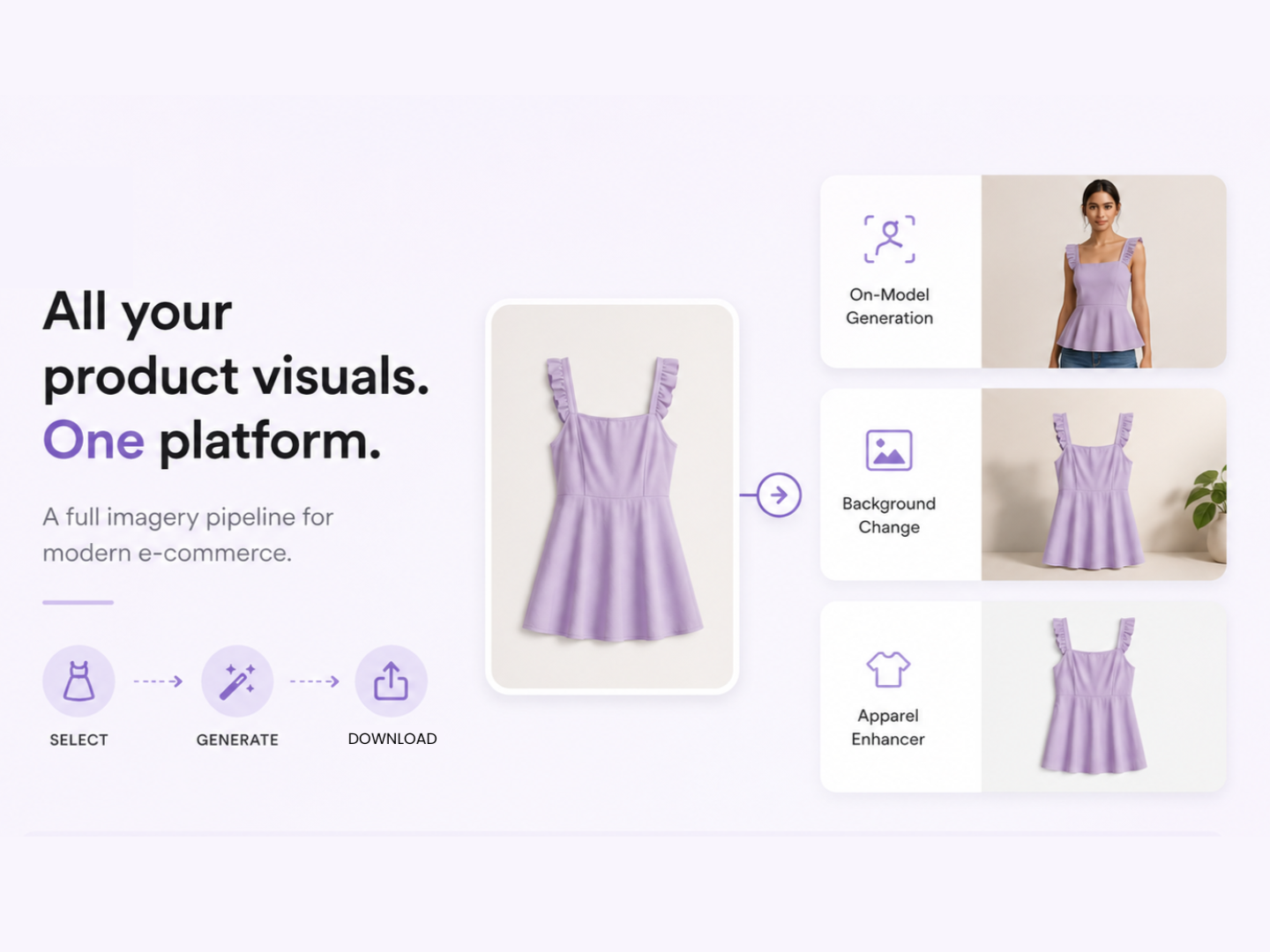
One pipeline, every format. On-model imagery, flat-lay enhancement, background swaps, UGC-style content, and product videos in a single tool.
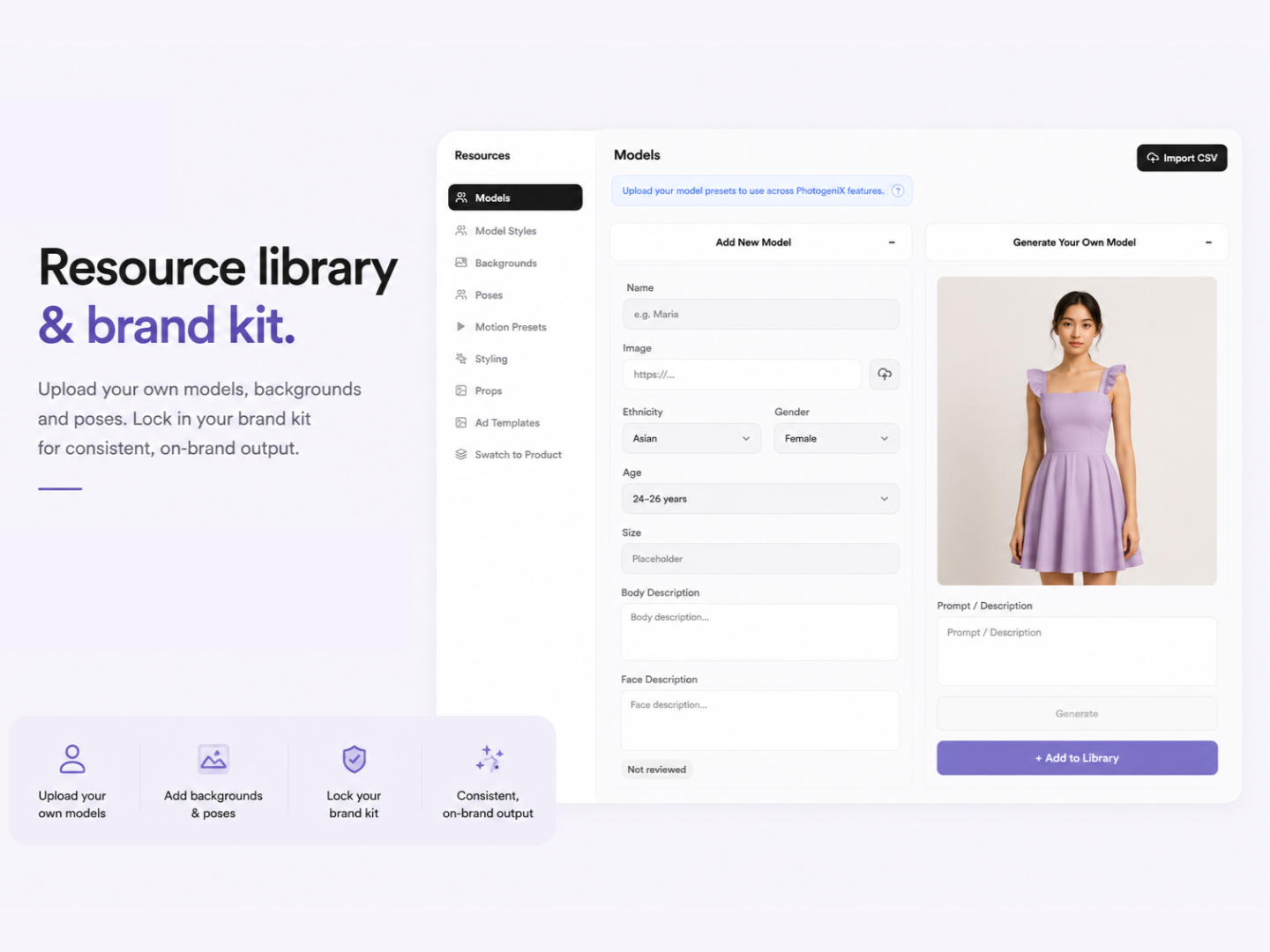
Consistency by design. Reusable brand resources (models, backgrounds, poses, styling references) keep every output on-brand.
Picking it up mid-project
I joined the team while Photogenix was already in flight, at a moment when a new lookalike AI imaging tool seemed to launch almost every day. The real challenge wasn't generating images; it was differentiation: making Photogenix the tool fashion brands actually reached for.
My fashion-retail background turned out to be a genuine edge here. I could read what brands really needed from product imagery and translate it into the few things we had to get unmistakably right to stand apart: fashion-credible quality (drape, fabric, category nuances down to saree), on-brand consistency through reusable assets, and workflows that matched how teams actually produce imagery rather than forcing them into a generic AI tool.
What the product does
The platform pulls a full imagery pipeline under one roof.
Core e-commerce enhancements
On-model generation, background changes, ghost-mannequin and flat-lay visuals.
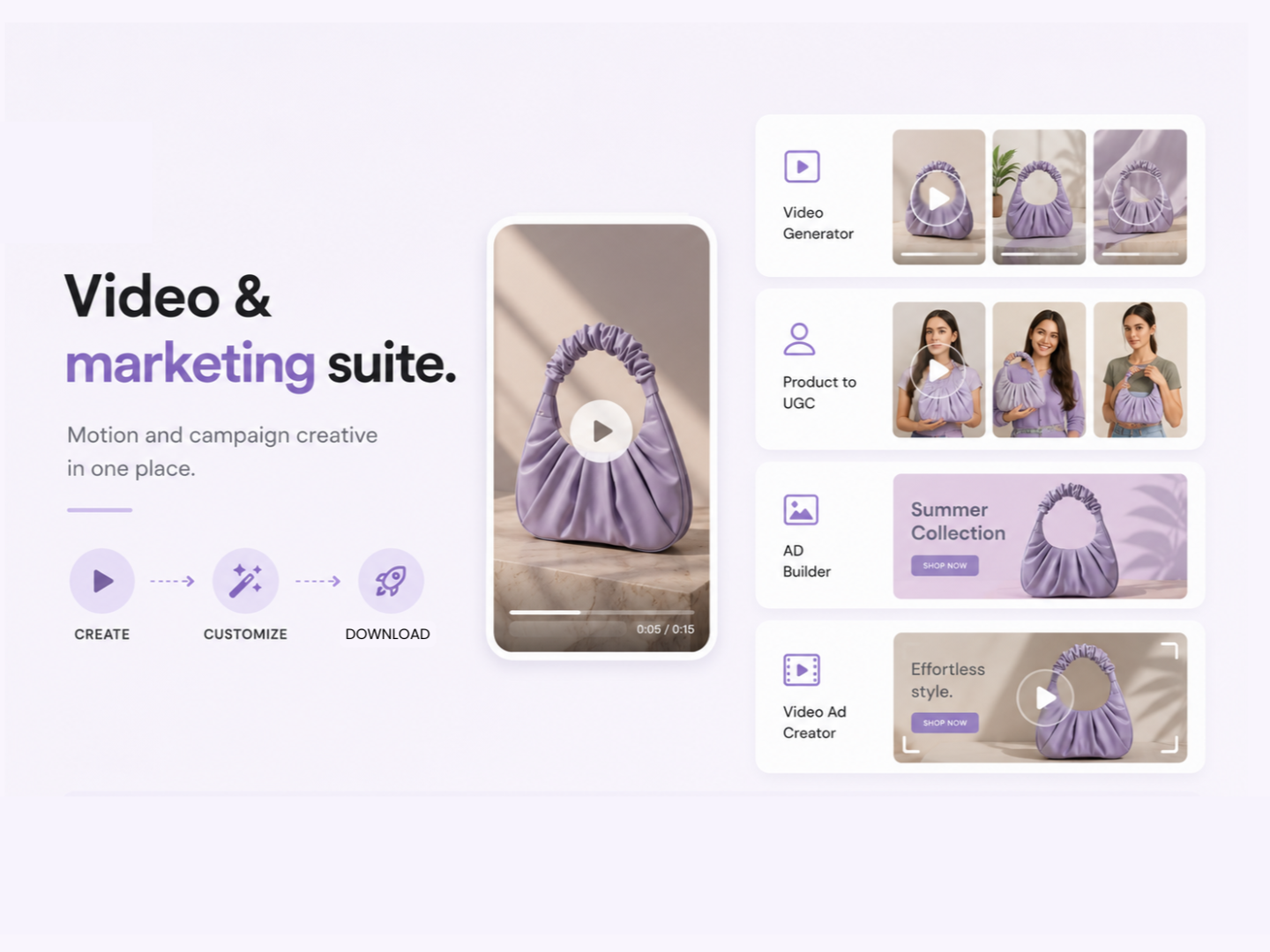
Video & marketing suite
Product videos, UGC-style content, an ad builder, and a video-ad creator.
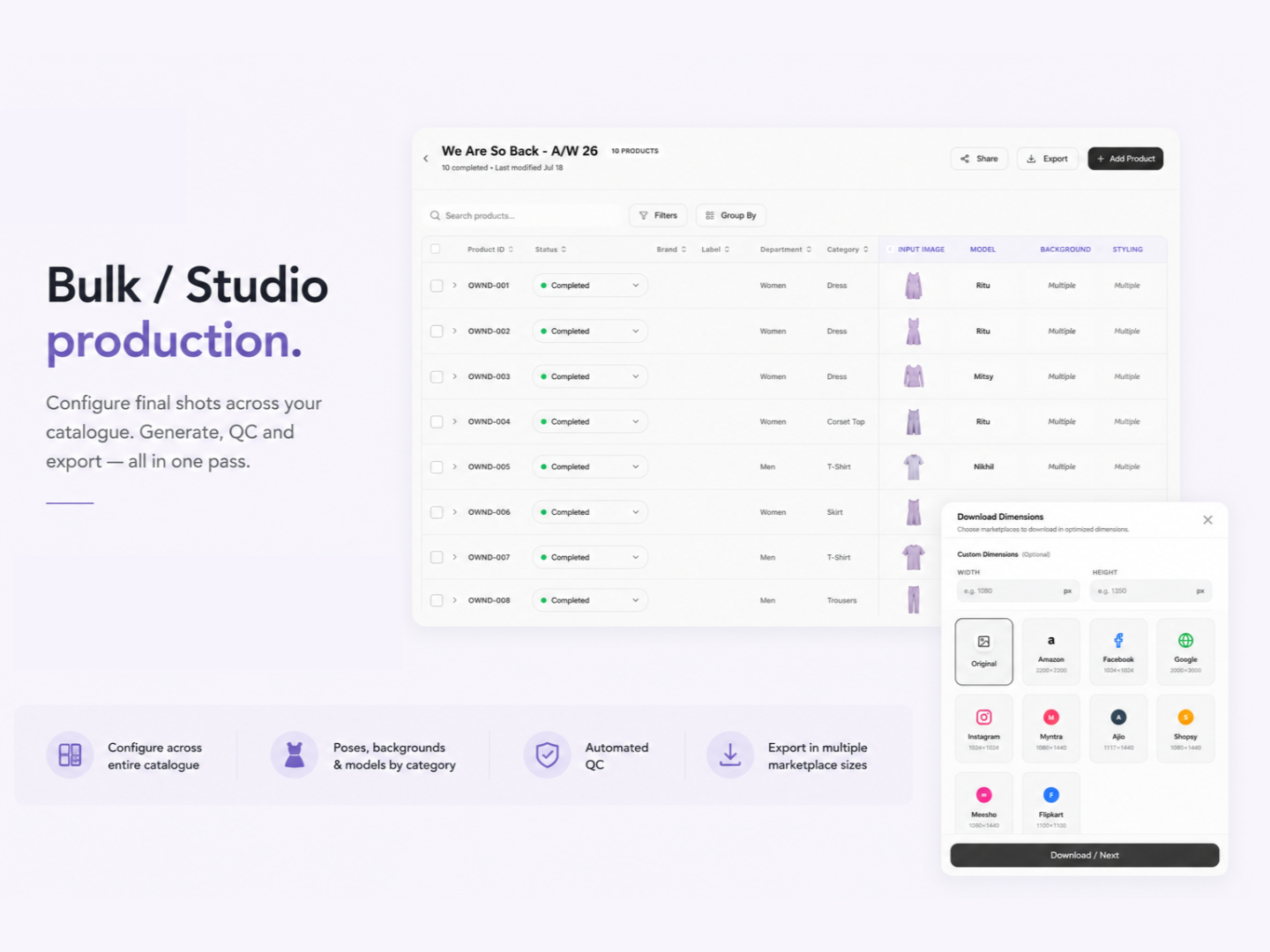
Bulk / Studio production
Configure once, generate whole catalogues in one pass, with automated QC and marketplace-ready exports.
Resource library & brand kit
Brands lock in their own models, backgrounds and poses, so every output stays on-brand.
Changes I drove
Each started as something I noticed while executing real projects through the tool myself, and ended as a shipped improvement.
AI Edit
AI Edit existed before I got involved. But running client projects through the tool myself, I kept meeting the same gap: the quick, ad-hoc fixes users need after a generation weren't where they should be. I proactively took on a revamp of the post-generation experience. The tech team handed over the API keys, and I owned the rest.
I prototyped UI structures in Google AI Studio and studied the editors users already trust. The sidebar panels of Photoshop and Illustrator inspired the drop-down design that shipped: every capability visible at a glance on the sidebar, each expanding into its controls only when needed. That structure deliberately leaves room for new AI sub-features as they arrive (which is how Crop was added), and it drove consolidation calls too. Features sharing a workflow or API were clubbed, so Retouch merged our earlier Auto and Mask features into one.
More than anything else, this stretch taught me how a tech feature is executed end to end, from API to interface to release.
Resource library
Photogenix claims to put a brand's entire imagery workflow under one digital umbrella, so the library had to hold everything a traditional shoot would. I studied core studio workflows and drove a rebuild around what styling actually demands: model hairstyles and makeup, a full styling wardrobe across top-wear, bottom-wear and footwear (down to saree), editorial-grade backgrounds, props and finishing elements.
Two additions then made it scale. Fashion brands rarely have one aesthetic. They run multiple mood boards and sub-brands, each with its own models, backgrounds, styling, lighting and poses, so teams can now build their own resource libraries, keeping every sub-brand on its own standard. And a creation card lets users generate any missing asset on the spot and drop it straight into their library (carried into the admin CMS as well), turning a fixed catalog into one that expands with every brand that uses it.
Client approvals
The most recent push came from watching how AI imagery actually gets signed off. Between studios and their clients, and inside the clients' own teams, feedback bounces endlessly across chats and emails, and reworks lose track of which comment belonged to which image.
So we integrated a client-approval flow into Studio, our bulk-production solution: every piece of feedback documented in one place, pinned to the exact image it refers to, and reworkable from right there. I guided the UI structure and pushed for it to work just as well on a phone: reviewing a batch should feel as easy as scrolling through window shopping. A small enhancement on paper, but it makes approvals faster, cleaner and genuinely user-friendly.
Beyond the features: how I drove it
Prioritization & sprint planningAssessed how users actually moved through each feature (via PostHog and our in-house evaluation platforms) and layered refinements onto what already existed, prioritizing that over piling on new features, while planning sprints to ship releases and high-priority fixes on time.
On the ground with clients & opsVisited studios to study traditional workflows, coordinated daily with clients and the in-house operations team, ran POCs, and handled onboarding, support and post-launch reviews.
Market & competitor analysisStudied competing products, their capabilities and price ranges to position Photogenix and shape our credit/cost model and feature set.
AI experimentation & prompt craftTested new models across Replicate, fal and LLM tools to stay ahead of a fast-moving field, and owned prompt improvement end to end: understanding how each keyword steers a result, layering in guidelines, and baking the non-negotiables into our base prompts so clients get quality output without having to think about it.
End-to-end ownershipValidated and verified shipments myself, and documented the full cycle: research, competitor study, PRDs, test & bug reports, release notes, and progress tracking.
Communicating across levelsTranslated priorities for a team that ranged from senior engineers to first-jobbers I onboarded, keeping everyone moving in the same direction under tight sprints.
Outcomes
Scale. Over 1M visuals processed for Indian retail and fashion brands.
Speed. ~60% faster turnaround, moving brands to same-day publishing.
Cost efficiency. ~65% lower cost per image than traditional production.
Tool consolidation. ~75% less reliance on external editing tools via in-app retouch.
Client conversions. Studio adoption driven by targeted demos and POCs.
What I learned
Owning a live product at speed, coming from a non-technical, fashion background, gave me a near 360° view of how SaaS actually gets built and grown.
Technical fluency by immersion. Holding my own alongside a team spanning senior engineers to first-jobbers I onboarded meant learning fast: reading what's technically feasible before promising it, and turning constraints into product decisions instead of working around them.
Judgment under real pressure. Prioritization stopped being theoretical once sprints and client deadlines were on the line. I learned to make sharp, defensible calls on what ships now versus later, and to stay accountable for the outcome either way.
Together, it built the habits of end-to-end ownership (research, PRDs, testing, release notes) and taught me what it takes to be responsible for a product across engineering, people, and clients at once.